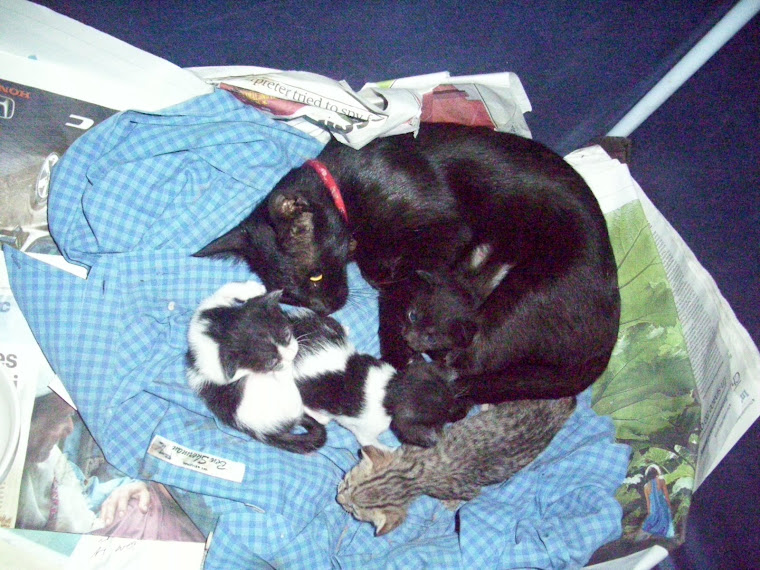
I follow a wonderfully-named blog called "lathophobic aphasia" http://giaklamata.blogspot.com/
by a chap with a lot of EFL under his belt and an excellent take on the joys and sorrows of the English teacher's life. He's been talking recently about "learner English" aka comic learner errors, a subject beloved of all EFLers.
As it happens I've been marking and reviewing writing exams. Here are a few of the delights I've stumbled upon (the topic was whether old people should be cared for by their families or in special homes).
I think tace car for the old People it well be like wine you take care for your sealdrenor your babey.
Thay need more care for food ho thiy eat and take abath and sleap also and if thay sike not soud yo bo you well thake him far the housebetal.
In my opening the beast please to be old people fine is home with family.
Another thing meny some of the people desn’t like niers, you wan’t help you one in you family.
I conclusion I hop every one to do what the beast for old people in my opeining everyone do this with any pearse.
Alson, the children meby bess in oyr live our withe them family so the will not tok care with bernts.
Meade the havi some desses and the should get madecen but the forget takeit then they will be very secia and ne one the new.
And I listen all people put the old man in the sameplaces.
Some people now put your mother and father of you old people on the special hospital and no need old people on your house.
In conctusion…
The interesting thing to note is that it's usually pretty clear what they are trying to say - in fact, if you read it aloud and allow for L1 interference (my students are Gulf Arabic speakers) and pronunciation confusions (p/b for instance), indifference to vowels in spelling, plus inadequate spacing between words, you can understand almost everything here - though I drew a blank on part of the second sentence - soud is presumable should, but yo bo I do' 'no'.
So the students are, in spite of appearences, getting somewhere. The problems are
a) knowing where to start in helping them
b) overcoming the horrors that the "surface errors" inspire in any teacher and most native speakers.
Anyway, reading these scripts made me feel fairly secia, but I try not to get mad(ecen). Definitely not soud yo bo, bro!
In conctusion, (but certainly not in my opening) I’m going home.
It’s the beast place for me.
I’ll check there are no old people on my house, especially not the mother and father of you old people, who must be ancient.
I’m planning to do something tonight that will be like wine.
A LOT like wine.
Monday, 10 May 2010

More politics, sorry
People were turned away at the polling stations. Young people were told to allow older people to go first, then by the time they got to the head of the queue they told the polling station was closed. In some places not enough ballot papers had been printed and people could not vote. In some places, would-be voters sat in to demand their right to vote.
Third world?
Nope, the UK.
Not everywhere, not all over, and almost certainly thanks to incompetence and antiquated systems rather than actual fixing - although there are enquiries going on in some places into the use of the postal vote, where suspiciouly large numbers of voters have suddenly registered from the same address.
It was a hard fought election and the majorities in many places are very slim - just a few votes between winning and losing the seat. In Oxford West, for example, after an ill-tempered campaign in which the sitting MP was described on leaflets as "Doctor Death", the winner polled only 176 more votes than he did.
What effect has the lost votes had around the country? Nobody knows, and the only way to find out is for individuals who believe they have been prevented from voting to mount an individual challenge in that constituency. If their challenge succeeds there can be a by-election.
Our voting system is often described as "first past the post". This is true on two levels. In the constituencies, the winner is the one with more votes than the next candidate, even if it's only one more vote. In Parliament, the party with more seats than the others gets to form the government - which means that all the ministries are headed only by members of that party, only that party gets to sit in the Cabinet (the inner circle) and the leader of that party becomes Prime Minister. Latterly, ministers and Cabinet members have even been appointed directly by the Prime Minister not necessarily from members of parliament (or, conceivably, even from members of the party of government), so important roles in government are taken by people who have not been elected to anything at all. Lord Young, part of Thatcher's government, was the first I can remember.
The situation at the moment is that the Conservatives, polling a minority of the votes cast overall, have more seats than the next party, Labour, but not more than Labour, the Lib Dems and all the small parties put together. This means that if they tried to pass any laws - especially laws that not all their own members agree with - the other parties could defeat them, and a government that cannot legislate cannot govern.
But Labour and the Lib Dems, polling a majority of the votes cast between them, don't have enough seats to pass laws if the Conservatives (and perhaps a few of the parties with one or two or three seats between them) oppose them.
So neither party can govern.
It's an irony of the situation that the two major parties which campaigned on electoral reform demonstrated the need for it by getting 52% of votes cast, but not 52% of the seats. The Lib Dems, for example, with nearly a quarter of the popular vote, got fewer than 10% of the seats.
This is why the negotiations between the Tories (who oppose electoral reform) and the Lib Dems (for whom it has been a platform for many years, and who stand to benefit most from it) are a bit delicate just now...
In the meantime, how would we know whether our elections are fair, or whether unfair tactics have been used, or whether local parties have lied to the electorate? Oddly, there is no central data monitoring, as Ben Goldacre explains:
http://www.guardian.co.uk/commentisfree/2010/may/08/bad-science-election-data
Saturday, 8 May 2010
Sexual Abuse
I blogged below about the sexual abuse which, it turns out, went on for many years at the school where my 3 brothers went and where my father taught from 1948 until his death in 1974. The school, Saint Benedict's, is run by the Benedictine monks of Ealing Abbey, which was also our parish church. One of the convicted abusers, David Pearce, was a priest at the Abbey. The other, John Maestri, was the maths teacher, and a family friend.
Since writing about it I have heard credible accounts from a close friend and ex-pupil at St Ben's of abuse by Maestri and by another monk, Fr Lawrence Soper, who is currently in Rome. Other allegations that I have heard indirectly name two other monks at the Abbey - one still alive, and in fact one of the trustees of the school, and the other now dead.
The deceased monk was head of the junior school when we were small - and I remember that my mother told me my elder two brothers did not start at the school at the age of five, as they could have done, because my father did not want them around this monk. I always assumed it was because that monk was heavy-handed with the cane, but now I wonder.
Well, Pearce was finally brought to justice after 30 years of complaints against him. In the last few years he was put on a restricted ministry and supposed to have no access to children (officially, according to the Abbey, the "protect him against false accusations"). Nevertheless, he was still able to find a minor to abuse. He was jailed for 8 years, after the court heard the testimony of some of his victims.
Fine, but on Friday his appeal to have his sentence reduced was heard, and it succeeded. He's now down to 5 years. The really extraordinary thing was the statement of the judge, as reported in the Times, that Pearce's activities should not be "elevated to the status of a crime". In which case, why on earth is sexual abuse of minors prosecuted at all?
What the judge seems to mean is that Pearce manipulated, groomed, emotionally blackmailed, groped, fondled and snogged boys in his care, and for whom he was headmaster, priest, and possibly also their confessor. He did not penetrate them, so it's not serious. Possibly also the judge thinks that as they were boys (some as young as 11) it doesn't matter so much. Well, we all know what boys are like, don't we?
In the words of Private Eye "this justice should be seen to be done."
Well, I wasn't going to blog about the election but it's been so interesting, and I've been thinking about it far too much for my own good. Plus my Facebook status updates were getting longer and longer... so here it is.
Interesting times - first hung parliament since I was a teen. Good. Labour did not deserve to win again after their record in power. Iraq mainly, but also so many things to chose from... mainly, for me, from turning themselves into Tory-lite, cozying up to the markets, the "faith" pressure groups and worshipping power and empire at its most naked in the GWBush adventures.
Unmitigated Toryness would be a disaster to all but the super-rich and the financial markets -as usual. The fact that they've got a smooth and emollient PR man at the head doesn't mean they have changed, expecially when you get... well, I was going to say "get below the surface", but Chris Grayling, the man who believes it's OK to discriminate against people, is shadow Home Secretary, which is hardly subterranean. Home Sec. is the third most important government minister.
The Lib Dems deserve some recognition of the fact that so many people in the country actually support them and their policies. It will be interesting to see how it pans out and will require negotiation and compromise - rather alien to the British tradition which is usually more adversarial and either/or.
Electoral reform may be on the cards now, at last, though that will be a tough one for the Tories, as they had specifically ruled it out. Right out. Right up until the morning after the election when they realised they'd have to offer some kind of sweetener to the Lib Dems to let them take power. So they've promised an all-party committee to bury it, I mean look into it. Classic political delaying tactic, given that there is likely to be a second election within a year. I hope Clegg has more sense than to accept.
Lib Dems also want to end Trident, a hugely expensive piece of junk which enables us to destroy Moscow if we really want to. Why we should want to, and why we should carry on with this vanity project left over from the Cold War is something nobody seems able to explain, but both Labour and the Conservatives have said we MUST keep it, because... er... we must.
Historically, Labour was against Trident, and only swung over to pointless militarism as part of the NuLabour project, which has done us so well in the last 13 years. It did get Labour into power, though and cast off the spectre of the mid 80s when they campaigned on a disarmament ticket, were slated as tools of Moscow and thrashed at the polls (though a majority of the voters voted against the party that won - more arguments for electoral reform, of course). But the Conservatives are generally the more military party.
And the Lib Dems want closer ties with Europe, which is a deep rift among the Conservatives still.
Tricky then for the Cons to work with Lib Dems, though as Cameron really really really wants to be PM and as his leadership style is extremely "kitchen cabinet" and centralised, he may manage to force his backwoodsmen and women to accept a deal, at least for the moment. He has a following wind in terms of media support, for now, and could possibly manage by offering deals and then blaming the Lib Dems if they fall through.
Tricky also for the Lib Dems to work with Labour, though they are in many ways more naturally allied. Labour promised electoral reform in 1997 (though forgot about it when they won a landslide under the winner-takes-all system), for instance. But Labour is very grubby and shopsoiled now, and Brown is no asset. Lib Dems might well lose popularity if they seem to be shoring up a government that the country thinks is well past its sell-by date.
So, yes, very interesting. A goodish result, I think, (and the first Green MP elected, hurrah!) but the exciting thing is what comes next.
Standby for a power struggle within Labour coming shortly, and before that, look out for what Clegg does next...
Tuesday, 20 April 2010
Beads and bead-related...
Beading is currently my new craze... not sure whether it's the scent of the glue or what, but I find making paper beads quite addictive. It's getting too hot to go our much so indoor activities are more appealling. Plus, I had a rush of blood to the head, accompanied by a rush of money from the pocket, at the Global Village this year, and bought lots of beads and semi precious stones to work into jewellery.
Then a friend who is an absolute beading fiend, found all these amazing shops in Dragonmart...
For those who don't know the Plague Pits of Mammon -- sorry, I mean Dubai -- Dragonmart is an enormous wobbly warehouse on the outskirts (insofar as Dubai, which has no centre, can be said to have outskirts.
Dragonmart is different from the average Mall in that it is entirely Chinese, mainly tiny little stalls and shops with names like Modern Appliance Trading Co (which sells, as you'd expect from the name, frilly baskets). Basically it is a cross between a souk, a Shanghai slum and the very biggest mound of tat you have ever seen or imagined in your life multiplied by ten.
Wander round there for five minutes and you wonder just how deep the Chinese tat mines can possibly be. Lots of shops sell beading suplies and what the jewellery trade rather bafflingly calls findings (the bits of wire, catches, spacer beads, etc that you string your beads on or use to stop them falling off the chain. I plundered.
Making paper beads, though, requires very little equipment - just toothpicks, glue, something to stick the toothpick into (I was using half a potato at first, but I've since acquired an old piece of polystyrene which does very well), scissors and paper. Thin magazine paper is good, but I've also had some fun with wrapping paper. I get pretty stuck on experimenting with shapes and colours. So far I've made two necklaces and a pair of earrings from paper beads and have dozens of beads in various stages of completion on the go.
Sunday, 14 March 2010
In theory...
Recently I exchanged a number of emails with my supervisor and the Human Resources person where I work, which resulted in a deeply philosophical conundrum.
The background to this is that I am leaving in June as I don't want to renew my contract here, but have accrued 16 days of leave that I am due.
First, I wanted to know what would happen about that leave I'm owed.
Instant and very clear answer from HR. I will be paid in lieu. Great.
Next I wanted to know if I could take a single day of that leave during the semester. There is one working day coming up when (for that day only) I have no teaching. I also won't be required for exams or for marking sessions. Could I take that single day off?
The HR person said "Certainly, if your supervisor approves it."
The Supervisor said "It's unprecendented and it can't be done."
I said "OK, but HR seem to think differently."
Supervisor replied "HR was talking theoretically about institution policy. Honestly I've asked "higher" and "higher" says it can't be permitted."
I thought of emailing Supe to elucidate the difference between a theoretical policy of yes which always in practice comes in as a no, and an actual and admitted policy of no... but I decided not to.
Just as well.
I'm pretty sure Supe doesn't see there is one.
(It occurs to me to hope that the payment in lieu will not merely be a theoretical one...)
Saturday, 6 March 2010
A roof over my head
Been very quiet for a while. Partly work and then holiday in England, during which I was offline for a massive 12 days (and saw the sun once, for half of a morning). Then back at work and job hunting - ah dear. I may just have possibly ever so very slightly mistimed my resignation, as the job market is pretty poor at the moment in my target areas and lots of people I would like to work for not hiring. Hey ho... Will be attending the job fair at TESOL Arabia next weekend and hope there will be a couple of possibles.
In the meantime, work on the tiny hovel in England has restarted and moved into phase ... what is it now? Phase 97? 324? I've lost track. Anyway, after the stripping of the carpets and the cleaning which was more like archaology, and tearing out the hideous fireplace, and putting in the woodburner, and new windows, and new doors, and a new boiler, and central heating, and underpinning the walls... we're now getting a new swing-a-rat kitchen and swing-an-undersized gerbil bathroom, yippee yiy yay!
Naturally as things get replaced or improved new defects occur - I was alarmed by a leaky roof blackened with mould, and news that the roof over the bathroom (a flat roof cobbled together in the 80s) was in a bad way. So we're getting a sedum roof put in (aka a living roof or a green roof), which I've thought was a great idea ever since I heard of them. Basically the roof is planted with a dense carpet of small plants that don't need that much care, so that instead of yet more tarmac - bad for runoff and flooding - there is at least something busy photosynthesising away. It won't reverse global warming, but it is quite a nice thing. Pity I can't grow veg on it (not strong enough for any depth of soil - the roof I mean, not me) as our garden space is the size of a tablecloth.
So it looks likely that come July I'll be back in the UK and jobhunting at a bad time, but I will have a niceish house to do it in. Count blessings... ONE.
Subscribe to:
Posts (Atom)


 Posts