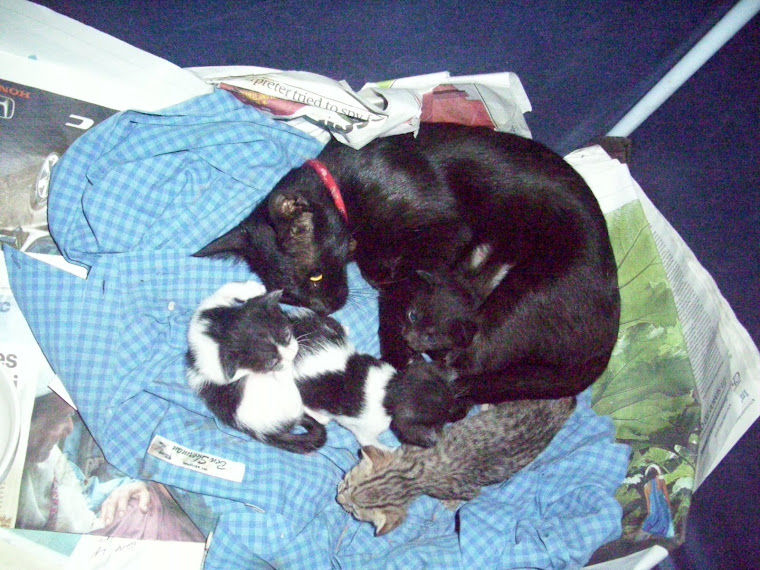
Monday, 4 May 2015

Politics politics politics


An open letter to Jess Asato and Adrian Holmes,
A few weeks ago I signed an online letter about protecting the NHS from privatization through a website which helpfully forwarded the letter to all the parliamentary candidates standing in my area, Norwich North. The one candidate who bothered to reply to me was you, Adrian, even though it was at the time when your party, Jess - the party which founded the NHS - was supposedly making it the forefront of its election campaigning. Well, horses for courses, and you are no doubt busy with all those doorstep conversations, Jess, but forgive me if I see that as yet another nail in the coffin of my confidence in the Labour party’s fitness to govern this country for the benefit of its inhabitants.
All the same - and I can’t fully express the rage and grief with which I write this – I’m strongly tempted to vote for Jess on Thursday. It is absolutely no reflection on you, Adrian: I’ve known about and admired your work in Norwich for years, especially your campaigns for Train Wood and against unnecessary road expansion.
Nor is it a rejection of your party. I support the Green Party because it stands for all the things I want my government and my country to stand for: a just society with opportunities for all to live better; a serious programme of investment in skilled jobs working to improve the world rather than to profit from its decline; a proper understanding of the urgency of climate change; a genuine commitment to disarmament, starting with canceling Trident; a desire to return railways to public ownership for public benefit; a commitment to keep private profit out of the NHS and to put more resources in. Also, the Green Party appears to be genuinely democratic in its working, with every member entitled to submit and vote on policies for the manifesto. I do not expect to see Green MPs dragged by the party whips into the lobbies to vote against their convictions. I do not expect Green MPs to vote in favour of wars of choice. I do expect Green MPs to regulate big businesses rather than be bought by them. How I wish I could say the same about the Labour Party.
But we live under a stupid and wasteful electoral system. Where I live, Norwich North, Labour lost the seat - virtually gave it away, in order to punish the sitting MP for rebelling against the Iraq War and NHS privatization – in 2009 to Chloe Smith, the Deloitte appointee to the Conservative Party’s PR department who was so spectacularly useless at the Treasury that her interview with Jeremy Paxman has become a byword for car-crash television. All the same, polling data suggests that the seat is the 7th or 8th most marginal between Tory and Labour.
And there’s my dilemma. If we wake up on Friday morning to find that Chloe Smith has got a single vote more than Jess, she will continue to sit in Parliament, supposedly representing the people of this constituency even though most of us will have voted for someone else. This time there is a real possibility that no party will get an overall majority in the House of Commons, so this one seat could make the difference of who gets to head the government (worst case scenario, and say goodbye to equality under the law, Tory-UKIP-DUP. Best case, Labour-Green-SNP – but Milliband claims he won’t hear of a deal with the SNP. Possibly because the LibDems have been busy signaling that they might be open to offers from Labour).
Such arrangements will require maturity and compromise from our political class, which I’m not convinced they have. Also, the arrangements are likely to be unstable. I suspect there will be another election within a couple of years, however I vote this time. But I am 55 years old and a cancer patient. I have seen enough of the damage that Tory governments have done within my lifetime, and I fear more of the same. But I also fear the damage Labour may do, with its Tory-lite policies, acceptance of the failed and discredited policies of austerity, refusal to stand against TTIP and to decommission Trident, and blithe ignoring of the environmental consequences of our present way of life. Although Ed Miliband has done some half-decent things in opposition - refusing to support another open-ended war, against Syria this time, stands out -  I detest the thought that voting for Labour on Thursday will be seen as endorsing the cowardly and misguided policies which make up much of the manifesto.
So I want you to know, Jess, that if I did vote for you it will be entirely in the spirit of the Alternative Vote, which your party campaigned to deny to us voters. Your party would currently be my third or fourth choice, after the Green Party, after the NHA Party, perhaps after the SNP if I could vote for them. Nothing against you personally: you are young enough to be untainted by the Blair years, you have run a decent campaign and you seem like a pretty nice person. If you do get into parliament I hope you will set an example of integrity and courage and work to push your party in a better direction. In which case, best of luck.
But this is not good enough. Why do we tolerate a system which erases our political wishes? Why do we allow the nose-holding, least-worst, grudging vote to be indistinguishable from that of the true believer. Especially, such votes are indistinguishable to those who get elected, who can preen themselves on a majority even if most of it was in fact delivered through gritted teeth, which means tactical voting is invisible to the elected. It also depends on a million things out of the voter’s control: I have no idea, for instance, how many people in my constituency are feeling exactly the same as me at this moment, and making the same bitter calculations.
If I had happened to move to the other side of the city instead of where I live now, I would have a real chance of being represented by a Green MP, Lesley Grahame, who actually does stand for what I believe in, (I’ve met her several times, too, and have the greatest respect and admiration for her: I hope she wins). Accidents of geography are already much too significant in our unequal life chances, with postcode lotteries affecting education, health and wealth. Why do we allow this to also be true in our politics? And, as long as the major parties remain major, there is no incentive for them to change it.
So what to do, in the actually existing Britain of our time? Which vote will make real change – long term change – for the better more likely?
Thinking forward to Friday morning when the count is in, I dread the overall result for the next few years of this country. But I can’t control that, only my own part in it. I would like, at this late stage, to feel proud of my vote, to feel that it did actually stand for something better than the desperate norm we have grown used to.
So, I know which vote will make me feel better about my choices and about the country I live in. I know which policies I want to become mainstream and which ones I want to see marginalized. I know which vote will move the country in a better direction, even if the candidate I vote for does not win this time. It’s a long game. So, Jess, I’m sorry, but the Labour Party isn’t ready yet for my vote. The Green Party is.   
Best wishes

Friday, 4 April 2014

The Labour Party would like me to be the first to know...

I got a chummy email from Angela Eagle MP, beginning "Hi Sarah"! 

We're not on first-name terms, actually, as we've never met, but I signed a petition about ending the Gagging Bill a while ago so now apparently we're buddies. 

Anyway, Angela (I think I can call her that now, even though she's Shadow Leader of the House of Commons) tells me that the Labour Party have promised to do just that, apparently cos I expressed my opinion that gagging charities from speaking about policies which have something to do with their remit (like food banks talking about food poverty) is profoundly undemocratic. Or possibly because they were always against it: maybe that's it.

So using my new-found power, influence and friendliness with the Labour Party - even the Shadow Leader of the House of Commons! - I made a few more suggestions.
Here's her email: 

----- Original Message ----- From: Angela Eagle Sent: 04/03/14 06:04 PM To: Sarah Subject: Telling you first:

Hi Sarah, Earlier this year, the Tories passed the so-called gagging law: an act that limits your right to campaign on the issues you care about, and curbs charities' and campaigners' ability to speak out against government policy. I believe strongly that this law is bad for our democracy, and restricts freedom of speech in our country. So I want you to be the first to know this: a Labour government will repeal David Cameron's gagging law. We have been clear from the start that we oppose this gag on charities and campaigners, which was introduced with little consultation. If Labour wins the next election, we will remove it from the statute book. In its place we will legislate for real reform of lobbying, and we will consult with charities and campaigners on the reforms we need to both ensure transparency and protect freedom of speech. Our right to campaign on issues we care about must be protected, and this gagging law needs to be repealed. Best wishes, Angela Angela Eagle Shadow Leader of the House of Commons

Here's mine.

-----------

Hi Angela! [Golly! But she started it!] Good! Well done. Could you also please re-nationalise the railways and the power companies for the benefit of the people? And end private prisons, which are a wicked disgrace to this country. And end the creeping privatisation of the NHS, even though some of your big names (like Lord Warner) stand to make lots of money out of it? Instead please could you concentrate NHS resources into medical work, not layers of bureuacracy and an 'internal market' - we know how that worked out for the BBC, after all. And pledge never again to use Capita again in any capacity? Also cancel Trident? And fund education decently? And agree to have some of your policies based on actual evidence of what works, not on prejudices and profit? And take climate change seriously as the biggest threat to our country currently existing or likely to happen in the coming 100 years? Because while this is a good start, it's only a start, and a small one at that. Best wishes Sarah Walker voter

Thursday, 27 March 2014

Cycle One Day One

Yesterday was day one of the first cycle of chemotherapy. I had been dreading it. Silly, really, because it spoiled the two days beforehand (an effect exacerbated by having finished a piece of work and not having got my act together to resume another) and would not have made the experience any better.

As it happened, the experience was not too bad.

I soaked my arm in warm water to bring up the veins and was attached to a drip by a nice woman called Amanda who sat with us and added in various drugs - 3 in all - explaining to me what each one was and what to watch out for. This was sitting in a comfy armchair and after having swallowed an anti-nausea pill.

Essentially, chemo is poison that stops cells replicating. This includes the cells which renew my hair follicles, which maintain mucus membranes, which produce white blood cells to fight off infection, and which reproduce like mad things and turn into tumours.

Obviously, only one of those effects is desirable: it's a poison that likes the cancer cells even less than it likes the rest of me. The other effects are unfortunate, but can be got over: they will recover. The cancer cells, at the stage I'm at, may well not recover, though it is likely to take six rounds of chemo - six whacks at the rat with a chemical sledge hammer - to get the point across.

One of the effects is risky - white blood cells, which are the cunning little chaps that see off infection. Without them, my immune system is up for grabs. I've got to monitor my temperature every day, and every time I feel bad, because in the absence of white blood cells I can easily get infections which normally I'd knock out in a couple of days - and which can kill me! So the magic number is 37.5 - any higher, and I call the emergency phone line. They recover, though - by week 3 they should be back up and running, thanks to the superb powers of my bone marrow. Just in time to get whacked again in round 2: hey ho.

I sat in the chair chatting with B and Amanda, and felt, basically, fine - a little light-headed, but I hadn't slept much. A heat pad wrapped around my arm to keep the veins wide was very comforting. The only odd thing it was having my right arm immobilised - I'm right handed, but the lumpectomy and lymph removal was on my left side, and it's better to put the chemo in on the opposite side.

One good thing was to be warned that one of the drugs gives you red pee - like beetroot does - and a terrible shock when you see it for the first time. Lucky she warned me.

Then pills to take at home - anti nausea. Some to take at fixed times of the day, some to take at will. Oh, and laxatives - the anti nausea pills freeze the peristaltic waves, so stop other things than vomiting. (I've always thought that Perry Staltic and the Waves should have been a 50s surf band. Unfortunately unlikely to have played on the same imaginary bill as Death Metal band Synapse Collapse).

By 11 we were all done. Next to me a lady in an elegant black and white turban was completing her 6th and last round of chemo with her daughter by her side.

B and I got the bus back to town and went for lunch at a fave cafe, Olives, which does root hash with scrambled eggs, and spiced apple warmer. Yum, yum. I was feeling fine. Then we wobbled up the road to cruise some charity shops for headscarves and hats and books. I bought two hand made pillowcases in thick linen with lace edging and handmade buttons for £6.

Slight sensation that my mouth does not taste the normal way.

Home, take temperature (35.7) drink ginger tea, check Facebook. I've been getting so much love and support and good wishes from my FB friends. Update that I'm feeling fine. And I kind of am.

And then - oooops! Sudden extreme vomiting. Not enough warning to get to the loo. Damn. There goes lunch.

Strip bed, change clothes, wash floor, shower, brush teeth, swill mouthwash.

Bleeaaah.

Take an anti-nausea tablet. Get bucket and retire to bed. Both cats come and cuddle me. B does too.

More ginger tea. Hmmm. How am I? Not sure. I nap and read, and listen to Keith Jarrett.

B starts cooking spicy soup for supper... smells wonderful.

Take some pills with a sip of orange juice and water.

Sudden vomiting... though I managed to get it in the bucket.

Bleaaah!!!

It was mostly ginger tea this time - but a distinct sensation of the pill I had only just swallowed coming up too. Hmmm.

Read the information leaflet. If you take more than the recommended dose you can have all kind of horrible effects, including disrupted vision and distressingly irregular heart beat. However, I decide I can't really have taken the pill first time around, as it wasn't in long enough to digest. Decide to risk it and take another one.

Went to sleep without supper... no problem.

Dreamt Nigel Farage and Nick Clegg were debating, but both wearing extremely thick-framed, square, totally black dark glasses. Convinced that neither of them had eyes... Bleaahhh!!

So, for nausea read vomiting.

But, like in Michael Rosen's "We're Going On a Bear Hunt" - "Can't go round it. Can't go over it. Got to go through it."

This is one down, five to go, and I can cope.


Thursday, 13 March 2014

Talking about cancer.

I have lovely friends and relations. I knew that already, but it's been brought home to me in lots of ways lately.

Early on in the process of discovering I have cancer, finding out what kind (breast), what stage (2) and what can be done about it (lots), I decided I was going to be upfront about telling people what it was. This is partly because there is still fear and stigma about cancer, and the fear certainly can work to prevent people getting diagnosis and treatment in a timely fashion.

I'm not surprised there is fear about cancer. It is a common cause of death, it is not always treatable, the treatment can be horribly debilitating and scary even when successful, and death from cancer can painful and wearying in a way that many other illnesses are not. I lost both my parents to causes which, while terrible - heart attack, stroke - were enviably quick (enviable for the person dying, that is, though shocking and traumatising for the bereaved). On the other hand, in the last couple of years I have seen good friends fight long losing battles against cancer which were incredibly wearing and painful to themselves and to their loved ones, as well as being bound to end one way only, as the cancers had reached stage 4 before they were even diagnosed.

So fear is pretty natural, and I have it myself. Stigma I don't understand at all, but that's another thing.

Anyway, I have cancer, but it doesn't have me, and I'm lucky. There is a lot that can be done for it, there is a tremendous amount of ingenuity, skill and support which goes into helping people with it, and the doctors are using the word 'curable' to me at every turn. Also I live in the UK and the NHS is underfunded and overburdened and under paid, but it's still world class and paid for from taxation rather than at the point of need. So why not tell everyone? After all, I'm going to have to explain to people why I've suddenly, for the first time since 1985, changed my hairstyle, why I might not be available for some of the things I do, why I might need to arrange cover for the classes I teach.

Telling folk does mean the people I tell are going to react to the information in their own ways. Everyone has their own take on it and that's fine.  Some express fear for me - which is OK: it is scary -  and some express bafflement (one dear person said "I don't know how to react to this" - to which the reply has to be "That's OK. I don't know how to react either") but all express concern and love. Someone sent jonquils, bless them, which make the whole house smell fantastic.

My friends and my family are great!

And... then there are also the odd responses.

A friend messages me with a link to a natural "cure for cancer": mistletoe. They ask me whether I've considered this as a treatment.

I reply with thanks, but at the moment (what with the doctors saying how it's curable and all) I'm going with the treatments the specialists tell me can cure my cancer, which is after all an extremely common and very thoroughly researched one. Friend replies saying "no doubt you have researched it and drawn your own conclusions."

Well, actually, do you know, I haven't researched it, very much.

Indeed, in the initial stages of my diagnosis (when I knew that I had breast cancer, but before I had seen the specialist to know whether it was operable or treatable or what kind of prognosis I might have) I was proud of not googling anything, because I knew that: -

a) what I found might not help me, and certainly wouldn't help me as much as the specialists would
b) what I found might quite likely be the worst case scenarios, which my imagination would no doubt fasten on
and mainly...
c) there would be a hell of a lot of dodgy and unsubstantiated claims popping up, from the silly-but-mild claims that something which kills cancer cells in a test tube will also kill them in your actual living body, to the frankly mad, bad and dangerous. Many of them - and mistletoe certainly falls into this category - are basically advertising by people who would like to sell you something.

"Research" is a curious word under the circumstances. Googling something may be the start of research (finding out what others have written, though only if it's online) but what comes up on the University of Google is ungraded for nonsense, charlatanry and source validity.

Research in the medical sense is rather more difficult. I don't have medical training, and I'm not, at 53, going to retrain as a scientific researcher all of a sudden, even now that I have a serious interest in an ailment and a first-hand experience of it that many researchers won't have. Also, we have a scientific profession (largely trained and funded at public expense), universities, hospitals and doctors by the hundreds all beavering away precisely so that when we are ill we do not have to chuck everything and become our own medical specialists.

While I generally agree with the idea that we take responsibility for things like keeping healthy (by for example not smoking, not drinking to excess, and trying to keep the weight down and to get out and about every day), I'm not about to reinvent medicine or come up with my own cures any time soon. I wouldn't be much good at it. I have other skills.

But among those skills are these. I can read, I can understand some serious scientific articles, and I have learnt from various sources (Ben Goldacre's wonderful Bad Science blog and books stand out) to have a certain degree of caution in interpreting evidence. I also have (and teach) approaches to assessing the reliability of sources, and a little bit about research project design validity.

It doesn't mean something from a respected source can't be flawed - the Lancet published the totally discredited and fraudulent article that started the MMR panic, for example, though they publicly withdrew it later - but at least the requirements of reputation encourage good sources to take validity seriously.

So, just for kicks, in the spirit of "research" (for a given value of research) I googled "mistletoe treatment for cancer". Millions of hits. The first one that comes from a reputable source is the BMJ - oh goody! Even better, it's a meta-analysis: a study of all the studies done that have been published. And it's by Edzard Ernst, a highly respected and very interesting man, who having been trained in homeopathy as well as conventional medicine has done more than most to test and to point out the nonsense that many 'alternative' treatments claim.

It's here:

http://www.bmj.com/content/333/7582/1282

Short summary - lots of proprietary mistletoe treatments available commercially in Europe and hundreds of thousands of websites promoting them. It's big business, worth millions of pounds, and in some countries insurance will pay for it.

And it doesn't work. The study is a meta-analysis, looking at the results and the set-up of all the different research that has been published. It rates them on findings (negative effect, no effect, positive effect), strength of result, and also on the experimental design. Bad design includes things like not double blinding, or poorly defined outcomes, or very small sample sizes which increases the chances that any changes are just random.

Here's what Ernst found about mistletoe as a cure for cancer: Where the research was badly designed, it got better results. When the research was better designed they got slight, no or negative results. This is to be read in conjunction with the fact that it is anyway harder to publish research which has slight or no or negative results: a lot of studies are started and just disappear from view, essentially because negative results make dull reading, and for worse reasons, like companies that sponsor the research deciding to only publish studies that make their products look good. (Amazingly, there is no central register that tracks what research is being done so people can catch companies dropping studies which disappoint them).  So the chances are that there have been more studies which the meta-analysis did not find because the results were too disappointing to publish.

And it isn't safe. Mistletoe treatments have resulted in a large number of serious adverse reactions, including ulceration and kidney failure. In the lab, mistletoe actually enhances the growth of some cancer cells (at least turmeric seems to kill them in the test tube, if not in real bodies! Besides which, turmeric is delicious in curries).

So, 20 seconds' "research" (googling) and 5 minutes reading the results gives me a strong sense that mistletoe, in spite of the hundreds of thousands of websites promoting it, will not be any use for what ails me, and might well be bad. I have cancer already: why would I want to risk kidney failure on something that does not work? (Not that there aren't adverse effects for the treatment I'll be getting. Unlike the commercial websites, though, the doctors have been entirely upfront about these, almost to the point of putting me off, and are doing tests to understand how far I'm likely to be susceptible to some of them so the effects can be mitigated).

I sent my friend the link to the BMJ, with thanks.

Oh, but I do so understand where this friend (like me a storyteller) is coming from!

It would be wonderful to imagine I could go into nature, out into the woods, to discover for myself the secret oak grove, where the healer (with a golden sickle, perhaps?) dispenses mysterious and magical mistletoe that will cure me. In imagination the white berries glow in the darkness of the sacred grove like little full moons. The healer will pluck one berry and give it to me, a little kiss of health from the wild wood.

It becomes a pilgrimage, a ritual journey that is a far cry from getting the 11 bus to the hospital (which is how I get to my healers), and also a long, long way from the actually existing version of "mistletoe as a cure for cancer", which would be a case of me sitting at home at the computer buying some expensive pills off the internet.

Even better, with "research" I could kid myself that I had become that healer.

It would be lovely if it were true. It would be just like a story.

It isn't.


Wednesday, 12 February 2014

Water, water everywhere...

We can't afford education. 
We can't afford to manage our energy supply. 
We can't afford the Arts. 
We can't afford health care free at the point of need. 
We can't afford training or skills for young people. 
We can't afford the elderly. 
We can't afford unions. 
We can't afford "Green crap". 
We certainly can't afford the sick or disabled. 
We can't afford to help people who can't find a job - but that's OK, because we don't want to help people like them anyway. 
We can't afford libraries. 
We can't afford Health and Safety. 
We can't afford soldiers' pensions, so we're sacking them weeks before they qualify. 
We can't afford woodlands. 
We can't afford Human Rights. 
We can't afford food safety inspections and anyway, why shouldn't people eat slurry? 
We can't afford the North, quite frankly, and why would we want to? 
We certainly can't afford to invest in renewables, or to put any money into mitigating the effects of climate change, or to build resilience into our infrastructure - but that is absolutely fine because there's really no such thing as climate change, honest, and we must frack the hell out of the country because there's money to be made and once again we are promising energy too cheap to meter. 
We must have permanent Austerity or else we'll become like Greece - and we wouldn't want to become like Greece, would we? 

And then - Surrey floods! Berkshire floods! Some carpets in millionaires' riverside homes get spoiled! The Queen could see flood water from the battlements of Windsor Castle, were she not staying in one of her other homes at the moment. 

And... guess what? "We are a wealthy country," says Cameron. "Money is no object."

Updated to add: apparently the unlimited cheque of our money that Cameron wrote yesterday to bail out some  Tory safe seats is going to come out of "underspend" in government departments. In other words, from cuts to social security, health, education, defence...


Thursday, 6 February 2014

The New News: Hair today and bald tomorrow


Thirteen days ago some highly skilled people injected me with a combination of drugs that made me unconscious and kept me like that while other highly skilled people cut me open in two places, put their hands inside the cuts, and took pieces out of my body.  Some of the bits they took out were located by earlier injecting me with radioactive material, and then using a small geiger counter, ticking away like an insane watch, to trace what they were looking for: the sentinel lymph gland in my armpit. 
Then, while the surgeon was rummaging in my breast for the original lump, some other highly skilled people with astonishingly advanced equipment studied the gland to see whether this cancer I’ve got had spread. It had, and so they concluded the operation by removing all thirteen lymph glands from my armpit. Then they sewed up both the cuts they had made,  and I was awake and back home by 8 that same evening.
“I am fearfully and wonderfully made” says the psalmist. Yes, the fearfulness quotient is increased when one has cancer, and knowing that it had spread as far as my lymph glands ratchets up the fearfulness considerably. The lymph appears to be a kind of distribution network for the body, with the lymph glands as the central sorting office from which unpleasant parcels of tumour cells can be dispatched to all locations. If it has reached there, where else has it got to?
So, two days ago, more radioactive material was pumped into my arm and a few hours later (I made a flying visit to the Norfolk Community History Club in the meantime) I lay fully clothed but with empty pockets on a gurney while a flat screen in a box hanging from a gantry clanked and crunkled its way very very slowly from my head to my toes. It started off about a centimetre above my nose, so close that the cross-hairs on the black screen blurred out of focus, and made adjustments (clunk) and shifts (crunkle) as it edged along to keep the same distance throughout. The point of this was to scan my bones, which the radioactive material would show up, in order to find out whether any cancer cells had set up shop there.
Now, bone cancer is easily the most frightening possibility I’ve had to contemplate so far, in this little vortex of “how bad can it get?” that we have been living in since December. Bone cancer is pretty fucking bad. So it’s extremely pleasing to report that the scan shows I don’t have it. (It shows I’ve got arthritic knees, but that I knew already).  Hurrah.  (Amazing how one’s perspective changes: in October 2013 I’d have been horrified to be told I had cancer: by February 2014 I’m delighted not to have a worse one).
This pleasing news was delivered to me yesterday by Mr Pain, the wonderfully-named surgeon who did the lymph and breast cancer removal. He’s wrongly named, too, because not only are the scars extremely neat and unobtrusive, I’ve had surprisingly little pain and my arm is fine (there’s sometimes loss of movement after lymph removal, but not for me).
Since then he’s been looking at the bits he cut out, or talking to the people who have, and the news is not so bad. 3 out of 13 lymph glands had cancer cells, and I still have to have a CT scan to check that those busy little distribution centres haven’t distributed them anywhere else. The cancer itself was about the size of the top joint of my thumb: it was medium aggressive, and responsive to oestrogen, which means, as I’d already been told, I’ll have to take an oestrogen blocker - but that it should help.
First though I’m going to have to have chemotherapy, starting quite soon. It’s going to make me feel like crap, I’m probably going to lose my hair, and we can’t go to New York in March as we planned, dammit. But it has a good chance of killing off the remaining cancer cells lurking about the place. After that I’ll have radiation on my breasts, and an oestrogen blocker to take for the rest of my days. 
But - and this is important - we’re still in the territory signposted “curable”.
So quite soon, probably before the end of this month, I’m going to cut all my hair off and shave my head. 
My hair is, at this present moment, waist length, last cut by someone other than myself in September 1985, when Sarah Peters trimmed my fringe for me before a job interview, and it will be strange to be without it. I was last bald in 1960, when I was a few months old, and I suspect my nut on my shoulders will look like a pea balanced on a drum, but there it is. It may regrow some day, though it will quite likely come through white this time.
Oddly enough, shaving my head has been a fantasy of mine for some years. I intend to keep my hair, plait it, and sew it into hats and things. 
I may also get a tattoo on my scalp, just for kicks. 
Gotta do something.

Monday, 13 January 2014

Better

A better day today.

Still no sleep - haven't had a proper night's sleep since last Tuesday, and last night had no sleep at all. This hasn't been anything directly connected with this cancer thang, but to other stuff going on. A crisis, to which I reacted badly.

OK, so I went to the allotment and saw - not what I had feared I'd see, which was a disaster area - but quite a lot needs doing.

Some of it looked kind of fun.

There were also some rewards: treats. Picked sprouts, and pulled some gorgeous fat carrots. Then came home with booty after chatting to the old chap with the blue blue eyes (I can't remember his name).

I like the allotment when it's just a big larder, essentially, the weeds are not growing much, and all we have to do is walk up and get stuff. I'm more a forager than a grower.

But we stocked the larder: hard work last spring and summer got us this.

Then... something else I'd been dreading, easing back into the novel. And I quite enjoyed it.

I tend to beat myself up a bit with writing as duty, especially at the moment when it's my job. BUT oh Lord when it's pleasurable it's really really pleasure. Lots of ideas, suddenly. Too many, of course, to pursue, but the last 4 days I've had none except dark ones unrelated to writing or researching.

It's said that Iris Murdoch and another writer whose name escapes me once got into a conversation about how much they enjoyed writing. Murdoch said 'Oh yes - but you must never tell anyone.'

Perhaps I should think of it as my guilty secret hedonistic pleasure, rather than my guilty undischarged responsibility...

Friday, 10 January 2014

Choices, choices

I have a life-threatening illness.

It is currently curable, they think. With an operation, maybe with more than one. With radiotherapy. Maybe, if needed, chemotherapy. Curable. It may not even affect my life expectancy.

But if it went untreated it would certainly kill me, in time.

So at times when life does not seem worth living, instead of knowing what I would have to do in order to cease, I know that all I have to do is refrain from doing things.

Don't go to hospital. Don't let them operate. Wait. Do what I'm good at: lie low, give no trouble, wait.

And things will happen, of their own accord, and I will not need to trouble myself - before long, will need to trouble nobody.

Wednesday, 1 January 2014

My news in 2013

So, the news with which I ended 2013 is that I have breast cancer. It is operable, and both the consultant and the support worker made great stress of the word curable.

In a couple of weeks the surgeon will remove a small chunk of me - a cancer and some surrounding tissue - and also a bit of lymph gland from my armpit. I imagine they grab the lymph first, as this gets whisked away to the laboratory while I'm still unconscious. If they find anything dodgy there they can then take all the lymph glands away in the same operation, which is convenient all round. They may later come back and take the lymph away in a later operation, after they've had time to have a really good look.

The next thing is to give me some radiation - locally applied - to make sure any spare cancer cells that may be lurking get knocked out.

If that doesn't work, there is chemotherapy, which will make me feel considerably crappier, but still a good deal better than cancer would, in the long run.

As the cancer is what is described as 'oestrogen fed', I then have to take an oestrogen blocker for probably the rest of my life. This will be a novelty, as I've taken very little medicine in my 53 years, and nothing day after day since my 20s when I was briefly on the pill. I daresay I can get used to it, and (having spent since November when I first noticed the lump wondering about different possible futures) am relieved that I may have time to.

Before Christmas, I went in for some samples of tissue to be taken from the lump which I had become aware of, and from the other lump I hadn't known about which the screening had identified, and the slightly suspicious lymph glands showing up, like knots in wood grain, on the ultrasound.

The sampling is done with a small spring-loaded gun type device which shoots into you, snatches a little core of flesh, and withdraws it through a shaft not much larger than a needle. It's like being punched hard by an incredibly dense and tiny fist, but means all you're left with is a small puncture wound and a bit of bruising. The consultant clicked it a few times first to get me used to the sound so I wouldn't flinch when it was actually being used - obviously, if you flinch, you're going to have worse bruising. I didn't and had only very tiny bruises.

This is all a part with the extraordinary amount of inventiveness and ingenuity that has gone into trying to stop people dying of cancer. About 250 years of treating breast cancer and finding out what works and what doesn't, from Fanny Burney walking alone to her mastectomy with no anaesthetic and hearing the surgeon's saw grate on her own ribs, to this.

In amongst the ingenuity, the language used is interesting. The support worker, Valerie, talking about possible effects, referred throughout to "ladies" - "some ladies find that this or that". Not being a lady myself, makes me wonder what I'm doing there. Conscious efforts are made to include one's partner, and B had the pleasure of hearing himself referred to as "hubby".

Certain phrases recur I suppose as formulae for getting us all through the social transactions involved. The surgeon read me a form in which he explains what he's going to do, and what he might have to do (for instance, if he needs to take all the lymph instead of a bit), and what effects it might have, and then hands it to me to take away, read and sign, with the words "My gift to you". About 15 minutes later, the support worker, piling information into a big file in case I fancy a bit of light reading, said the same thing.

 Both concluded by saying "Well done" to us both several times. Buoyed on this wave of congratulation we made our way to our bus before I wondered what exactly it was we'd done well - possibly, well done for not breaking down? Or refusing to countenance treatment? Or refrained from punching the surgeon?

Or perhaps it was just a signal that the interviews were over and we had leave to depart, without using words such as 'goodbye' or 'that's your lot', which might, under the circumstances, make people nervous.

So 2013 ends as it began, with a visit to hospital. Last January it was B who had a scare, which turned out to be nothing. Come to think, the last few Januaries have involved visits to hospitals, though always for other people.

This time it's for me, and I'm glad and grateful we have such good hospitals, and the NHS in general - there for us when we need it... still.


Thursday, 26 September 2013

26th September or How They Met My Mother

My mother, Marian, was born on this day in 1921. 

She was born at home, during the day, in an upstairs bedroom in Army Road, Clapham, according to Uncle Eddie, who took me for a walk around Clapham in about the year 2000. I think the road has been renamed but the house is still there. Later on they moved around the corner to the house my Mum remembered.

Auntie Mary is still alive and fabulous in South Africa. In 2001 she told me about how she met my mother. This is the story:

The midwife came in and turned the dining table upside down on the carpet. She put Mary (who was three and a half) and Eddie (who was about 18 months old) on the table top with some slices of bread and butter and told them "This carpet is the sea and this table is a boat. If you get off the boat you'll fall into the sea and drown, so stay where you are." Then she went upstairs. 

It worked. Mary and Eddie stayed on their boat floating in their imaginary sea, eating their bread and butter rations, while upstairs the baby was coming into the world. Later on, their big sister Gladys, aged 8, came home from school and looked after them until they were allowed upstairs to see their new sister.

My family has always been susceptible to the power of stories.


Sunday, 18 August 2013

Random Thoughts about Nick: Cars, Vans, WOMBATS


Cars, Planes, WOMBATS

I once thought of writing the story of a relationship in terms of the vehicles in which and by which it is conducted, over several years. This seemed plausible to me even though I can't drive and have little idea what goes on under a car bonnet.  

Clearly it was Nick I had in mind.

In 1985 he was still in his young executive slimline briefcase phase, although, in his own words, had just fucked his career at American Express.

He had gone to his bosses and demanded they remove him from a jetsetting job running training for Amex agents all over French-speaking Africa, to doing any available work in the massive Brighton offices that could be dropped like a hot brick at 3 each afternoon in order for him to pick Jess up from nursery. He then spent the next hours playing with her and getting her tea before dropping her back at her Mum’s at seven pm.

I think there had been some additional deal about him returning to the AmEx office for another few hours work after that, or at weekends, but I’m pretty sure it seldom occurred. But pick up and spend time with Jessica he did, every weekday.

The car was a Cavalier: a model much loved by advertising execs and sales fleet procurers. It was metallic looking – very popular in the 80s – and the very first car I’d ever been in where the music system played CDs instead of battered cassettes that got stuck and spewed loops of tape.

CDs! The very cherry on the Black Forest Gateau of 80s sophistication!

The sound quality was very good indeed: in fact there was a James Last CD in which Nick could make out a metallic little clink. After careful listening he concluded it was the sound of the flute knocking against the music stand.

In-car listening was not quite what you’d associate with Nick of later years: Eurythmics, Level 42, Simply Red, and bloody Dire bloody Straits, who were everywhere at the time. But also Dr Hook, whose surprisingly rude songs may well have influenced subsequent donkey-based humour, the delightful Roche sisters, for the Plum to sing along to from the Plumseat in the back, and Frank Zappa, Joe’s Garage, as soon as Nick knew I had been a Roman Catholic. 

Blasting along between Birmingham and Leamington Spa, or from Brighton to Drusilla's, or through Southern England on the way to Glastonbury, we sang The Freaker's Ball, Ireland Soon, and many another. 

Later came Vanessa, a VW camper van. I think there were at least two Vanessas, one with a popup top in which there was a little den for Jessica to sleep in at festivals.

The final Vanessa, in the mid 1990s, became a bit of a nuisance, which Nick decided to solve by arranging for it to be “stolen” and disposed of while he was away visiting me in Thailand.

He was outraged on his return to find the thing still gently rotting where he had left it. ‘Where can you find a thief you can trust these days?’

Finally there came a succession of vans and trucks, in various states of repair, many of them fitted out with ingenuity, often full of musical paraphernalia, old t-shirts, and even worse, musicians.

In one WOMBAT - Waste Of Money, Brains And Time - covered in rust and patches, he drove up to Norwich for August Bank Holiday 2003. We had both just returned to England from elsewhere – he from France, me from the United Arab Emirates.

The van pootled along fairly reliably once it got going, but starting was complicated. It involved pulling out the cover behind the steering wheel – revealing a spaghetti of different coloured wires - and Nick diving down into the footwell with a large pair of pliers while at the same time keeping a hand, or occasionally a foot, on the wheel. He could not see where he was going and get going at the same time, and the tangle of wires became ominously longer each time.

At one point as we potttered along the Norfolk lanes we passed a convoy of rather splendid glittering vintage cars coming the other way, out for what was probably their ‘once a year if the weather is right’ excursion away from the deep oil, bubble-wrap, and temperature-controlled garages in which they were usually preserved. The drivers were vintage too – some of them dressed appropriately in deerstalkers, capes, big hats and so on.

Nick fixed his eyes on the drivers, took both hands off the wheel and applauded wildly, nearly causing the leading driver to swallow his meerschaum pipe.

‘It’s nice of them to make all that effort just to entertain us,’ Nick said. "Think of all the trouble they’ve gone to so we can look at them.

And they  have to look at us! "


Monday, 12 August 2013

April Fool: Random Thoughts about Nick


April Fool

Nick always claimed he was an April Fools’ Day prank.

The story was that after his big sister Lesley was born his father said, “One’s enough”. So Nick’s Mum sabotaged the marital condoms. Before noon on April 1st she was able to say “April Fool!” 

Sure enough, Nick was born on Boxing Day 1950.

I have no idea whether that was true or not, but remembering Romee, Nick’s tank driving, Nazi-escaping, Japanese-Prisoner-of-War-camp-surviving, multi-lingual German-Dutch-Jewish matriarch mother, I wouldn’t be at all surprised.  

(There’s a memorable vignette of Romee in A Liars Autobiography, by Graham Chapman, the deceased Monty Python member. Chapman and other Pythons used to drink at The Monarch in Chalk Farm Road, the pub that Nick’s parents ran, and attended Nick’s wedding some time in the 70s).

Sunday, 11 August 2013

Tales for Weddings

A couple of storytellers have asked about tales suitable for weddings or engagement parties. 

There are millions of stories on a theme of marriage, some more, some less appropriate for weddings, though weddings are traditionally places where inappropriate things can be said too. 

However, I'm not sure many newly weds would want Dave Tonge, the Yarnsmith of Norwich, to tell his startling tale of the husband, the wife, the angel and the magic ring just in the middle of their celebrations... (Not that it isn't a great story: you must hear Dave tell it some time! Just not exactly wedding fare, no matter how rude the best man's speech).

Anyway, here's a tale which appears in Jewish (Ashkenazim) tradition but also in India and North Africa (Mahgrebi) tales. 

* * *

Back in the days when young men and young women did not mix much socially, people still used a matchmaker to help them find a husband or wife. 

The matchmaker was called to a family where the son was thinking about getting married. 

Did he have any specific woman in mind? asked the matchmaker. No, said, the young man, but she has to be a kind-hearted girl - I couldn't live with a wife who was unkind.

The matchmaker thought about it and suggested some suitable, kind hearted girls, and the young man thought about it and said 'Fine, but what do they look like? I want a beautiful wife, obviously.' 

So the matchmaker thought again, and came up with a list of kind girls who were also beautiful. 

And the young man said, Yes, but are they intelligent and well-educated? I couldn't possibly marry someone who wasn't.

The matchmaker gave it some thought and brought a list of girls who were kind and beautiful and intelligent and well educated. 

And the young man said, You know what? It would be ideal to have a wife with a bit of money put by. 

So the list got re-jigged again. And this time the young man said, I forgot to mention cooking. A woman who can cook well - that's so important for me.' 

So... finally the matchmaker brought a list of suitable girls who were kind and beautiful, and intelligent and educated and had some savings and were good cooks. 

And the matchmaker and the young man went through the list, and this one had a brother the young man disliked and that one, well, the young man had once heard her use a swearword in public, which of course put her out of the question for him, and this one sometimes wore a dress the young man felt did not suit her ... and so the list got shorter and shorter, until there was just one woman left on it. Surprising there was anyone, really. 

And try as he might - and he did try hard - the young man could not find anything to object to. She was, by his standards, the perfect woman, and he thought she would make him the perfect wife. 

So... great excitement, the matchmaker set up a meeting between the two.

The young man went off to the meeting looking very pleased but he came back looking like a wet weekend.

What's the matter? said the matchmaker. Wasn't she as perfect as we thought?

No, said the young man. As far as I can tell, she's the perfect woman.

The problem is, she's looking for the perfect man.

Ah, you didn't think of that, said the matchmaker, and walked away.

* * *

Friday, 9 August 2013

Practice seminars today.

Students discuss rival candidates to become visiting lecturers and try to agree who to choose.

One student's vote went to Semen Cowell.

Surprisingly apt.

Thursday, 8 August 2013

The Language of Disagreement

Preparing students for a seminar exam, recommended language for expressing disagreement includes:

- I'm afraid I'm not convinced...

- Well, you may have a point, but...

and

- I'm sorry but I really don't go along with that.

No mention at all of the most commonly used expressions in my household:

- Bollocks!

- Tummy rubbish!

and the diplomatic, not to say literary

- Up to a point, Lord Copper.


It seems a shame that students do not tend to get exposed to the actual English expressions used by people like me (by which I mean habitually foul-mouthed people, of course).

Which reminds me I have totally failed to introduce the expression 'bolleme' into everyday English. Based on lexeme, meaning a unit of lexis (or as we say in English, a word) bolleme means a unit of bollocks.

Examples:

Phew, that management meeting had a particularly high bolleme count, didn't it?

Looks like 'synergy' is bolleme of the day.

I thought that article was pretty good except for the bolleme on page 4

Adam Smith supposed that all participants in the market are rational actors and have all the information they need to choose rationally at all times based on their own best interests - which is a bit of a bolleme, when you come to look at the evidence.


There is clearly a need for this handy expression, but so far, alas, no takers.


Wednesday, 7 August 2013

Random thoughts about Nick: Shooting stars


One August and another.

Early August, and the Perseid meteor shower swings past the planet again.

Nick and I crept out to one of the Downs, to a wheat field, nearly due the cutting, well over the brow of the hill from the city glare.

Gradually our eyes began to get used to the night sky, and then flickers at the edge of vision, fugitive glitters which seemed sure to be – nothing, just eyes playing tricks – intensified, brightened, and resolved themselves into long striations of light passing over us, here, then there.

Finally a speck of light appeared, grew brighter, bigger, closer, hurtling towards us, and instantly winked out. We both jumped, blinked, shook our heads.

I swear we could feel the star grit in our eyes.

Later, as we got up to go, collecting the rugs, Nick looked at the imprint we’d left in the field, which I’ve no doubt has been extra fertile ever since.

“Ahah! A crop oblong!”

‘Shooting stars,’ became a code between us – a secret password.

Now the Perseids are passing  by us once again, on their ineffable journey, as I head south to see him off  on his.

Shooting stars.


Tuesday, 6 August 2013

Random Thoughts About Nick: I dreamt about my Dad

In Sussex staying with friends and preparing to commemorate one of my oldest friends, Nick Clyne, who died on July 25th. I've been jotting down some random thoughts and memories about him and thought I'd post one or two as they occur.


I dreamt of my Dad.

I’ll explain.

Meeting Nick for the first time, in December 1985, the initial impression was strongly, and rather alarmingly, reminiscent of my father, who had at that point been dead for 11 years.

There were resemblances. Both were witty, affectionate, highly intelligent, fat men with - as I discovered the next day, when Nick invited me round to tea with him and Jessica, then known as the Plum - a much-loved daughter.

Physically, apart from the fat, they were not in the least alike, but their emotional and intellectual signatures were remarkably similar. So much so that, when Nick and I were beginning to make a leisurely progress towards the inside of each other – a journey which began almost immediately  - I found the resemblance off-putting, and told him so.  (I’ve since made peace with the liking for witty, affectionate, highly intelligent fat men – men with curly ginger hair - that seems to have been imprinted on my psyche ever since. I’m married to one, but back then it had not occurred to me that I had a type.)

On Wednesday afternoon, 24th July 2013, I started to feel ill at work – dizzy and nauseated. I went home early, and the next day stayed off work and off line, feeling the room spin round.

Early on Friday morning I dreamt my Dad was sitting beside me. In Nick’s voice, he told me, ‘I’ve been alive again for a few years, but I’m going to have to be dead for a bit now. Sorry.’ 

I told Barrie what I’d dreamt, went to work and logged onto a computer to check messages.

And there was the announcement of Nick’s death.